

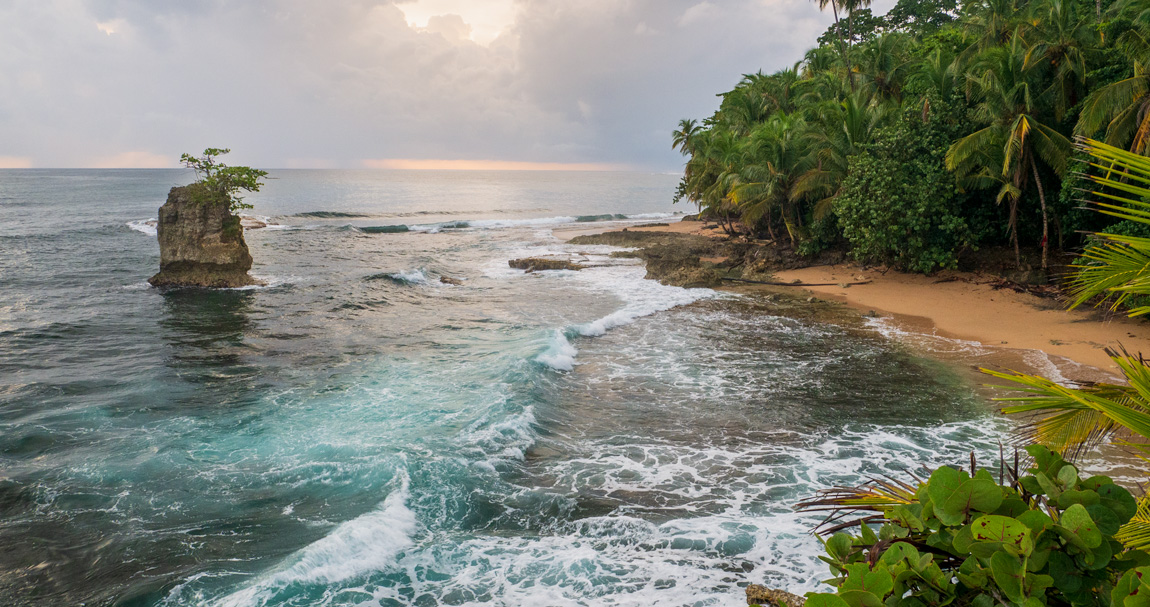

Gandoca Manzanillo Guided Hike Wildlife Spotting
Some trails make you work for every sighting. Gandoca Manzanillo guided hike wildlife spotting is different. This stretch of Costa Rica’s South Caribbean is one of those places where the forest feels alive from the first few minutes – a rustle in the canopy, a flash of blue from a morpho butterfly, the slow shape of a sloth that most people would walk right past without ever noticing.
That is exactly why a guided hike here changes the experience. You are not just walking through a beautiful reserve. You are walking with someone who knows where howler monkeys tend to move in the morning, which tree a troop of capuchins visited yesterday, and how to spot a sleeping snake that looks almost identical to a vine. For travelers staying in Puerto Viejo, Punta Uva, or Manzanillo, this is one of the best wildlife experiences on the Caribbean coast if you want high reward without needing technical gear or a full-day expedition.
Why Gandoca Manzanillo is so good for wildlife spotting
The Gandoca-Manzanillo Wildlife Refuge protects a mix of coastal forest, wetlands, beaches, and dense tropical habitat. That variety matters. Different species use different layers of the landscape, so even a relatively short hike can produce a surprising number of sightings if conditions are right.
This is where many visitors get caught off guard. They expect a scenic nature walk and end up seeing far more than they thought possible. Sloths are a major draw, of course, but they are only part of the picture. Depending on the trail, the weather, and the time of day, you may also spot howler monkeys, white-faced capuchins, green iguanas, basilisks, toucans, parrots, trogons, poison dart frogs, leafcutter ants, and the kind of tiny camouflaged creatures that turn a normal walk into a full-on treasure hunt.
The setting helps too. This part of the coast feels wilder and quieter than more built-up areas. There are fewer distractions, less traffic noise, and a stronger sense that you are stepping into intact habitat rather than a park edge. For travelers who want a more natural, less crowded outing, that is a big reason to choose this area.
What a Gandoca Manzanillo guided hike wildlife spotting tour adds
A lot of wildlife in Costa Rica is hidden in plain sight. That is not a slogan. It is the reality of tropical forest observation. Animals freeze, blend in, and stay high in the canopy. Even experienced travelers often miss sloths, owls, snakes, and tree frogs unless someone trained in spotting is scanning ahead and listening carefully.
On a guided hike, the pace shifts in your favor. Instead of walking trail miles for the sake of distance, your attention narrows to movement, sound, and detail. A good local guide does more than point and say the animal’s name. They explain behavior, feeding patterns, nesting habits, and why one section of trail is active after rain while another is better on a hot morning.
That local knowledge is especially valuable in Gandoca Manzanillo because conditions change quickly. A sunny early hike may be best for certain birds and monkeys. A damper, shaded stretch can be better for amphibians and insects. Sometimes the best sighting of the day is not a big animal at all, but a perfectly camouflaged eyelash pit viper or a line of ants carrying bright green leaf pieces across the forest floor.
For families and first-time Costa Rica visitors, the guide also removes a lot of uncertainty. You do not have to wonder which trail entrance to use, whether you are missing key species, or if that movement in the branches is worth stopping for. You can relax into the walk and let the forest come to you.
What you might see on the trail
Wildlife sightings are never guaranteed, and anyone who promises a perfect checklist is overselling the experience. Still, this refuge has excellent odds for a productive outing, especially with a sharp-eyed guide.
Sloths are among the most requested sightings, and for good reason. The area supports both two-toed and three-toed sloths, though behavior and visibility vary. Monkeys are also common stars of the hike. Howlers are often heard before they are seen, while capuchins tend to bring more movement and chaos to the canopy.
Birders and casual wildlife lovers both do well here. Even if you are not traveling with binoculars and a life list, it is hard not to get excited by toucans, motmots, hawks, hummingbirds, and parrots passing through the trees. Reptiles and amphibians can be a highlight too, especially for travelers who enjoy the smaller details of the rainforest. Frogs, lizards, snakes, and brilliant insects often become the most talked-about part of the morning.
And then there is the plant life, which deserves more attention than it gets. A guided hike often turns ordinary-looking greenery into a story about medicinal plants, fruiting trees, pollinators, and the relationships that hold the forest together. That kind of interpretation is what makes the walk feel richer than a simple sightseeing stop.
Best time for a guided hike in Gandoca Manzanillo
Morning usually gives you the strongest all-around wildlife activity. Temperatures are cooler, birds are more active, and mammals can be easier to spot before the day gets hotter. If your goal is broad wildlife spotting with comfortable hiking conditions, an early start is the safest bet.
That said, it depends on what you care most about. After light rain, the forest can become especially active for frogs, insects, and certain reptile sightings. Some travelers worry that cloudy or damp conditions will ruin the outing, but on the Caribbean side, a little moisture often improves the rainforest feel rather than taking away from it.
Season matters less than people think. There are productive hikes throughout the year. The real difference comes down to timing, guide quality, and your expectations. If you want a quiet, immersive nature experience with strong wildlife potential, almost any well-planned morning can deliver.
Is the hike difficult?
For most travelers, this is a manageable nature walk rather than a hard trek. Trail conditions can be uneven, muddy, or root-filled in places, especially after rain, so sturdy shoes help. But you do not need to be an advanced hiker to enjoy it.
That is part of the appeal for couples, families with older kids, and travelers who want meaningful wildlife encounters without a punishing pace. A good guide adjusts the rhythm around sightings, terrain, and the group’s comfort. The goal is not to rush. The goal is to notice more.
If you are traveling with very young children, have mobility concerns, or want the easiest possible terrain, it is worth asking in advance which route is the best fit. Honest guidance matters here. Not every trail suits every traveler, and good operators are upfront about that.
Why guided is the better value than going alone
On paper, a self-guided walk may look cheaper. In practice, many visitors finish those walks having seen very little beyond scenery. The forest is beautiful either way, but the difference between a casual hike and a wildlife-focused experience is usually the person leading it.
A local guide increases your chances of sightings, helps you understand what you are seeing, and keeps the outing stress-free. That value goes beyond animals. You also gain context about the refuge, the coastline, conservation pressures, and the communities connected to this landscape.
Choosing a small-group local tour has another benefit that matters on the South Caribbean coast. Your booking supports people who actually live and work in the region. When tours are run responsibly, the money stays closer to the forest and the communities protecting it. That is better for travelers who care about ethical tourism, and better for the place itself.
This is also why direct communication makes a difference. If you want to know whether the hike is right for your family, what to bring, or how to pair it with another nature experience nearby, a local team can give you real answers instead of generic booking-platform copy. Caribe Sur Costa Rica has built its reputation around exactly that kind of on-the-ground support.
How to get the most from your Gandoca Manzanillo guided hike wildlife spotting experience
Come with patience. The best sightings often happen when the group pauses, listens, and gives the forest a minute to reveal itself. Wear neutral colors if you can, bring water, and keep your phone or camera ready but not constantly in your hands.
It also helps to reset expectations in the best way possible. This is not a zoo and that is the point. One day may bring monkeys, sloths, and toucans in the first hour. Another may lean more toward birds, insects, and hidden reptiles. Both can be excellent hikes if you enjoy the process of looking closely.
Travelers who have the best time here are usually the ones who let the guide lead, ask questions, and stay curious about the small things. A perfect frog on a leaf can be just as memorable as a sloth in the canopy if someone helps you see why it matters.
If Gandoca Manzanillo is on your list, make space for it as more than a quick checkbox outing. Go with someone who knows the refuge well, give yourself time to move slowly, and treat wildlife spotting as part skill, part luck, and part local knowledge. That is when the trail starts to feel less like a walk and more like an invitation into the real South Caribbean.


