
Cahuita Wildlife Hike: What a Guide Changes
You can walk Cahuita National Park and see almost nothing – then, on the way back to the parking area, a local guide stops, points into a tangle of cecropia leaves, and suddenly your “empty” morning turns into a close-up sloth sighting you would have sworn wasn’t there.
That’s the real difference with a Cahuita guided wildlife hike. Cahuita is generous, but it’s subtle. Most of the animals people come for are built to disappear: camouflaged, quiet, and perfectly happy letting you pass.
Why a Cahuita guided wildlife hike is different
Cahuita’s trail system is easy to love because it’s not a “mountain hike.” You’re walking a coastal rainforest path with Caribbean light, ocean breeze, and long stretches that feel calm and approachable for couples, families, and solo travelers.
The trade-off is that the wildlife isn’t always obvious. Sloths can look like a clump of leaves. Howler monkeys can be loud but far back in the canopy. Basilisks freeze at the first hint of footsteps. A guide changes your results because they aren’t just walking – they’re scanning at the right angles, at the right heights, in the right places, based on what’s been active lately.
A good wildlife guide also helps you slow down without feeling like you’re “missing distance.” In Cahuita, moving slower usually means seeing more: tiny poison dart frogs near damp edges, leafcutter ants carrying bright green flags, or a camouflaged bird that you only notice once someone points out its outline.
What you’ll actually do on the hike
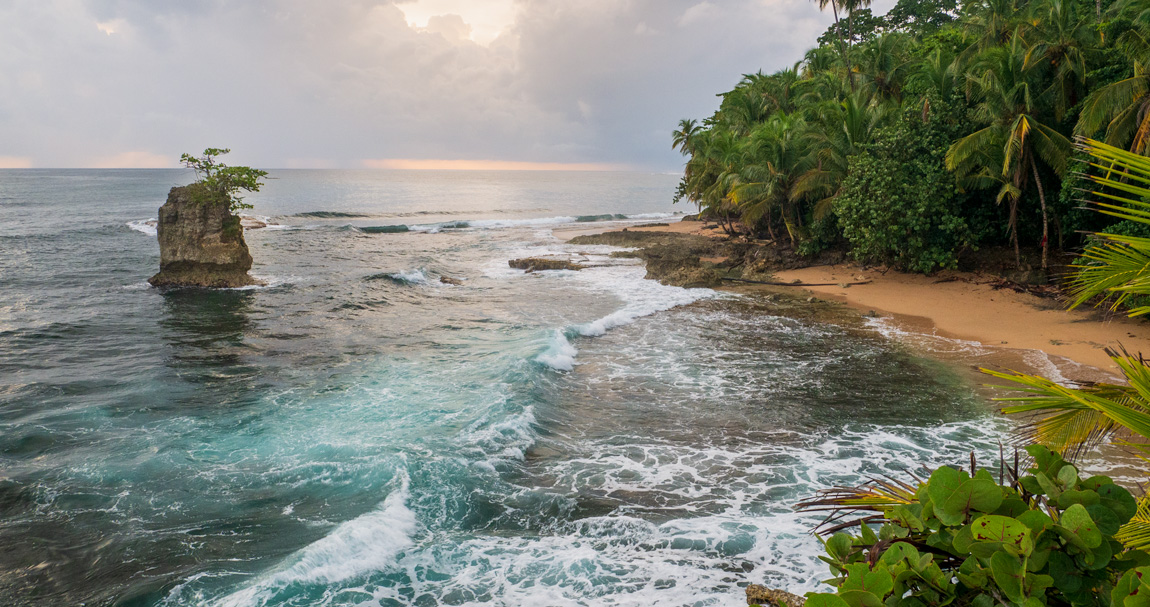
Most Cahuita wildlife hikes follow the park’s coastal trail, which mixes rainforest shade with open beach sections. Expect a relaxed pace with frequent stops – not because it’s hard, but because there’s almost always something worth looking at when you know what to look for.
Your guide will typically start by setting expectations: wildlife is wild, and nothing is guaranteed. But the “odds” improve a lot when your guide is reading signs like fresh feeding marks, movement patterns, alarm calls from birds, or a troop of monkeys traveling through a certain corridor of trees.
Along the way you’ll hear the stories behind what you’re seeing. Cahuita isn’t just a pretty place to spot animals – it’s also a landscape shaped by sea, storm, and community. The park sits right alongside the town, and that proximity creates a rare feeling: you’re not sealed off in a distant wilderness, you’re walking the edge of a living Caribbean village.
Animals people hope to see in Cahuita
Most travelers come into a Cahuita guided wildlife hike with a short wish list: sloths, monkeys, and colorful birds. That’s a realistic trio here, especially with a trained eye.
Sloths are the headline, and Cahuita can deliver, but they’re the classic “you’ll miss it if you blink” animal. A guide helps you spot the shape: a dark curve against pale leaves, a slight movement that gives away what your brain reads as a branch.
Monkeys are often the second big moment. Howler monkeys are common, and you may hear them before you see them. White-faced capuchins can be more active and playful, sometimes traveling through the canopy in small groups.
Bird life is where Cahuita quietly steals the show. You might catch toucans, woodpeckers, parrots, or a flash of something bright cutting across the trail. With a guide, it’s not just “a bird” – you learn why it’s in that tree, what it eats, and how the forest structure supports it.
And then there are the surprises. Depending on the day: raccoons near the shoreline, iguanas sunning in open patches, basilisk lizards near water, or snakes tucked into vegetation where you’d never think to look. The point isn’t to collect a checklist – it’s to notice how much life is happening in a place that can look quiet at first glance.
Best time of day to go (and when it depends)
If you want the best mix of comfortable temperatures and active wildlife, morning usually wins. The forest feels fresher, the light is softer for photos, and many animals are still moving around before the heat builds.
That said, “best” depends on your trip style. If you’re not a morning person, a later start can still be rewarding – you’ll just want to accept that it may feel warmer and some wildlife may be less active. On the flip side, fewer people on the trail can sometimes make skittish animals easier to observe.
Season matters too, but not in a simplistic way. Rainy season brings lushness and can heighten the rainforest feeling, plus you may get fewer crowds. Dry season can make logistics easier and the beach sections brighter. Either way, a guide helps you adapt in real time: where to pause, where to scan, and when to wait quietly for the forest to “reset” after a group passes.
What to wear and bring without overpacking
Cahuita isn’t a gear-heavy hike, and that’s part of why it’s such a good fit for families and first-time visitors. You’ll be happier with breathable clothing, comfortable walking shoes or trail-friendly sandals, and sun protection for the exposed sections.
Bring water, of course, and consider a light rain layer even on a day that looks perfect. The Caribbean coast can flip the script quickly.
Binoculars are nice, but not required. Many guides carry a spotting scope, which is the real game changer for seeing canopy wildlife clearly. If you love photography, a zoom lens helps, but you can still get great memories with a phone when your guide positions you well and gives you time to steady your shot.
Why going with a guide supports the park and community
Cahuita is special because it’s not a “tourism bubble.” Your choices ripple outward. When you book a guided hike with local professionals, you’re supporting people who live here, who know the seasons, and who have a long-term stake in keeping the wildlife thriving.
A good guide also models respectful wildlife viewing: keeping distance, minimizing stress on animals, and helping your group avoid accidental behaviors that can harm habitat. In a place where the trail runs close to both ocean and village life, that kind of stewardship isn’t abstract – it’s practical.
If you want a small-group, locally led option with direct communication and honest pricing, Caribe Sur Costa Rica runs guided experiences across Cahuita and the South Caribbean with a strong focus on wildlife expertise and community benefit.
Self-guided vs. guided in Cahuita: the honest trade-offs
Some travelers love the independence of walking at their own pace. If you’re a confident nature spotter, have binoculars, and enjoy the process of searching, self-guided can be peaceful.
But if your priority is high odds of seeing the animals you flew here for, guided is usually the better value. The hidden cost of self-guided is that you might walk the same trail and miss what was right above you. Another factor is interpretation. Knowing that you saw “a sloth” is great. Understanding why it’s in that specific tree, how it moves through the canopy, and what threats it faces turns the sighting into something that sticks with you.
Guided also helps if you’re traveling with kids, or with family members who don’t want a long trek. Stops become engaging instead of frustrating, because every pause has a purpose.
How to pick the right Cahuita wildlife hike for your group
Not all hikes feel the same, even in the same park. The best fit depends on your pace, your must-see list, and how you like to travel.
If you’re traveling as a couple and want a calm, photo-friendly experience, ask about smaller groups and morning starts. If you’re a family, ask about pacing and how interactive the guide is with kids – a guide who loves explaining insects, tracks, and plant life can turn the hike into a real adventure.
If you have mobility concerns or just want to keep it easy, say so. Cahuita can be gentle, but the comfort level changes with heat, humidity, and how long you want to stay on the trail. A good operator will help you choose a plan that feels fun, not punishing.
The little moments people remember
Most guests remember the animals, but they also remember the in-between: the way the forest smells after a short rain, the sudden quiet when a troop of monkeys moves overhead, the tiny details your guide points out that make the ecosystem feel like a living puzzle.
Cahuita has a way of making you feel present. Not rushed, not staged. Just close enough to wild nature that you stop checking your phone and start scanning the trees like you’ve always known how.
When you plan your Cahuita guided wildlife hike, aim for curiosity more than certainty. Bring your questions, your patience, and your sense of humor – the forest doesn’t perform on command, but it rewards the people who pay attention.


