

Can You See Sloths in Punta Uva?
If spotting a sloth is high on your Costa Rica wish list, Punta Uva is one of those places that can make the whole trip feel worth it. So, can you see sloths in Punta Uva? Yes – absolutely. But this is not a zoo, and that is part of what makes the experience so special. Sightings depend on habitat, timing, weather, and a trained eye that knows how to read the trees.
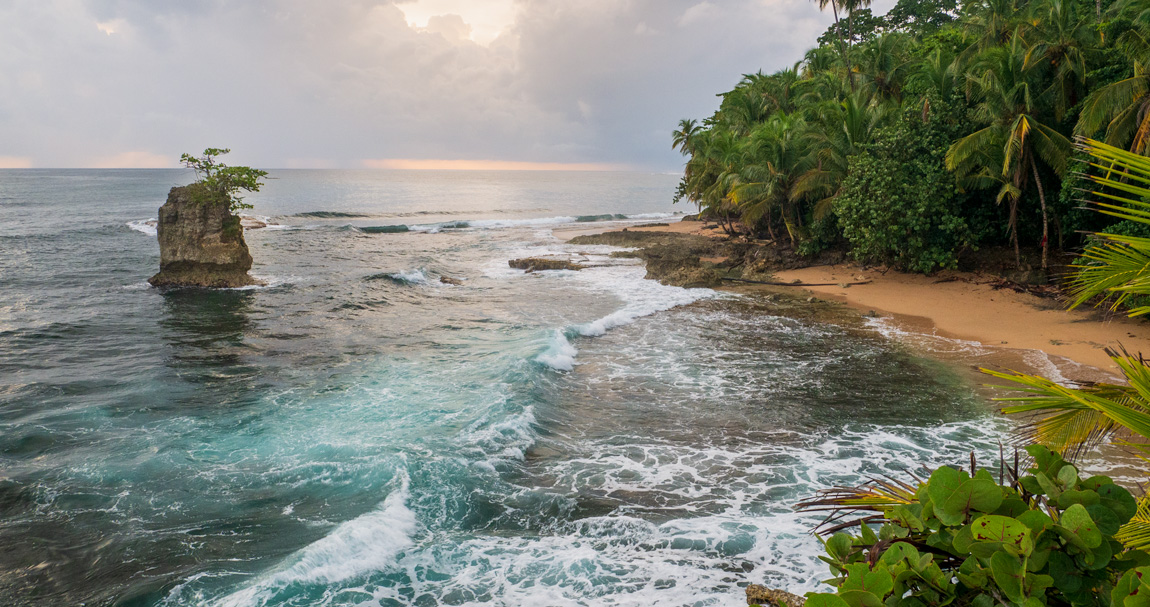
Punta Uva sits in one of the richest wildlife corridors on the South Caribbean coast, between Puerto Viejo and Manzanillo. The area blends beach, jungle, roadside almond and cecropia trees, quiet residential stretches, and protected forest edges. That mix gives sloths what they need, and gives travelers a real chance to see them without going far from the coast.
Can you see sloths in Punta Uva year-round?
Yes, you can see sloths in Punta Uva throughout the year. Both two-toed and three-toed sloths live in this part of Costa Rica, and they do not migrate. If the habitat is healthy, they stay close to their food sources and familiar canopy routes.
That said, year-round does not mean guaranteed every hour of every day. Sloths are masters of camouflage. A three-toed sloth can look exactly like a knot in the branches until it moves its head. A two-toed sloth may spend much of the day tucked deep in the foliage, especially in thicker cover. Some visitors spot one in five minutes. Others walk past three and never know it.
This is why local knowledge matters so much here. In Punta Uva, sloth sightings often happen in places that do not look dramatic at first glance – a roadside tree line, a quiet lane near the forest edge, a patch of canopy over a creek, or a jungle section between beach access points. To an untrained visitor, it is just green. To an experienced guide, it is a set of clues.
Where sloths are most often seen in Punta Uva
The best sloth habitat in Punta Uva is not about one famous photo spot. It is about the right kind of tree cover. Sloths are often found in cecropia trees, which are a favorite food source for three-toed sloths, and in connected canopy where they can move with minimal exposure.
In practical terms, that means you have the best odds in the greener stretches between Playa Punta Uva and the road toward Manzanillo, around forested properties, near quiet streams, and on wildlife-rich roadsides early in the day. Beachfront open sand is beautiful, of course, but sloths usually show up where the jungle starts pressing close to the road or trail.
Protected areas nearby also improve your odds. The wider Gandoca-Manzanillo zone supports the kind of biodiversity that makes Punta Uva feel alive even on a short walk. Monkeys, toucans, basilisks, frogs, and sloths all benefit from the same healthy habitat. When you are in a place with this much intact vegetation, wildlife encounters stop feeling random.
Best time of day to look for sloths
Early morning is usually best. The light is softer, temperatures are lower, and wildlife activity is generally easier to read. Guides also have an easier time spotting shape, color contrast, and movement in the canopy before the sun gets harsh.
Late afternoon can also be productive, especially on quieter roads and forest edges. Midday is still possible, particularly for sleeping sloths, but the heat and stronger light make spotting harder for most travelers.
Rain is not always a bad thing. On the Caribbean coast, a little cloud cover can actually help by softening glare. Heavy downpours, though, reduce visibility and make leisurely wildlife watching less comfortable. If your schedule allows flexibility, plan your sloth search for a calm morning rather than squeezing it into the hottest part of the day.
What kind of sloths live around Punta Uva?
Punta Uva is one of those lucky areas where you may see either of Costa Rica’s best-known sloth species.
The brown-throated three-toed sloth is the one many travelers picture first. It has that classic round face, a gentle expression, and very slow, deliberate movement. These are often easier to identify when they are out on more open branches.
The Hoffmann’s two-toed sloth is usually harder to spot. It tends to be more tucked in and can blend deeply into shaded foliage. They are often more active later in the day or at night, though you may absolutely find one resting during daylight hours.
For most visitors, the species matters a little less than the moment itself. Looking up and realizing that what seemed like part of the tree is actually a sloth holding a baby or stretching one long arm across a branch – that is the memory people carry home.
Can you see sloths in Punta Uva on your own?
Yes, you can. Many people do. If you stay alert, move slowly, and spend time in the right habitat, you may get lucky. Punta Uva is far less built-up than many beach destinations, and wildlife is genuinely part of the landscape here.
But there is a trade-off. Self-guided sloth spotting can take a lot of time, and without binoculars or spotting experience, it is easy to miss animals that are right above you. Travelers often underestimate how skilled local guides are at finding wildlife. It is not only about sharp eyesight. It is about knowing preferred trees, recent sightings, animal behavior, and the subtle difference between a dead clump of leaves and a sleeping sloth.
That is why guided wildlife outings are such a good fit for this region. Instead of hoping you happen to look up at the right second, you have someone actively scanning, interpreting sounds, and adjusting the route based on what is happening that day. In the South Caribbean, that can be the difference between a nice walk and a truly memorable wildlife experience.
Why guided experiences improve your odds
A strong local guide does more than point at animals. They help you actually see what you are looking at. Once a sloth is located, they can position you for the best angle, explain the species, and share behavior you would never catch on your own.
This matters even more if you are traveling with kids, have limited time, or want high odds without turning your vacation into a long wildlife scavenger hunt. Small-group outings are especially valuable because they move quietly, avoid crowding the animal, and give everyone time to look through a scope without feeling rushed.
In this part of Costa Rica, the best wildlife experiences also come with context. A guide may explain which trees sloths prefer, how habitat fragmentation affects movement, or why ethical viewing means keeping distance and never disturbing them for a photo. That is the kind of knowledge that turns a sighting into a connection.
For travelers staying around Puerto Viejo and Punta Uva, booking with a local operator like Caribe Sur Costa Rica can make the experience much more efficient and personal. You get people who know the region day to day, not just in theory, and who care about keeping wildlife encounters respectful and low-impact.
What to expect from a sloth sighting
A sloth sighting in Punta Uva is usually quiet and unhurried. This is not a dramatic safari-style chase. More often, it starts with your guide stopping suddenly, raising a hand, and having you look into what seems like an impossible wall of green. Then the shape appears.
Sometimes the sloth is curled into a ball, sleeping so deeply that it barely seems real. Sometimes it is climbing, eating, or carrying a baby. On especially lucky days, you may watch one crossing between branches with surprising confidence.
It is worth setting expectations the right way. You are not likely to stand face to face with a sloth at eye level. Most are up in the canopy, and a scope or binoculars makes a huge difference. What you gain is something better than a staged encounter – a real look at an animal living exactly where it belongs.
A few simple tips for better chances
Wear neutral colors, go early, and slow down. Bright beachwear is great for the sand, but softer colors help you blend into a wildlife setting. Bring patience, because spotting sloths is often about scanning carefully rather than covering a lot of ground.
If you have binoculars, bring them. If not, a guided outing with optics is well worth it. Keep your voice low, avoid playing sounds on your phone, and never ask anyone to get the animal to move for a photo. Ethical wildlife watching is part of what keeps Punta Uva special.
And remember that sloths are only part of the story here. A good morning in Punta Uva might also include howler monkeys in the canopy, a toucan crossing overhead, poison dart frogs near the trail, and the kind of tropical stillness that makes every movement in the trees feel electric.
If you are wondering whether Punta Uva is worth adding to your itinerary for wildlife, the answer is yes. Come for the beach if you want, but keep your eyes on the trees – that is where the real surprise often begins.


