
Is a Cahuita National Park Tour Worth It?
You can absolutely walk Cahuita National Park on your own. The trail is flat, the coastline is beautiful, and the entrance from Cahuita town feels straightforward enough.
But here’s what usually happens: people spend half the walk staring into the trees, hoping to spot something moving, and walk right past the sloths, snakes, frogs, and tiny camouflage experts that were sitting there the whole time.
That’s why a guided experience changes the day. A good Cahuita National Park tour is not just transportation and a ticket. It is the difference between “nice beach walk” and “we saw a sloth with a baby, a basilisk, two kinds of monkeys, and learned why the reef here matters.”
What makes a Cahuita National Park tour different
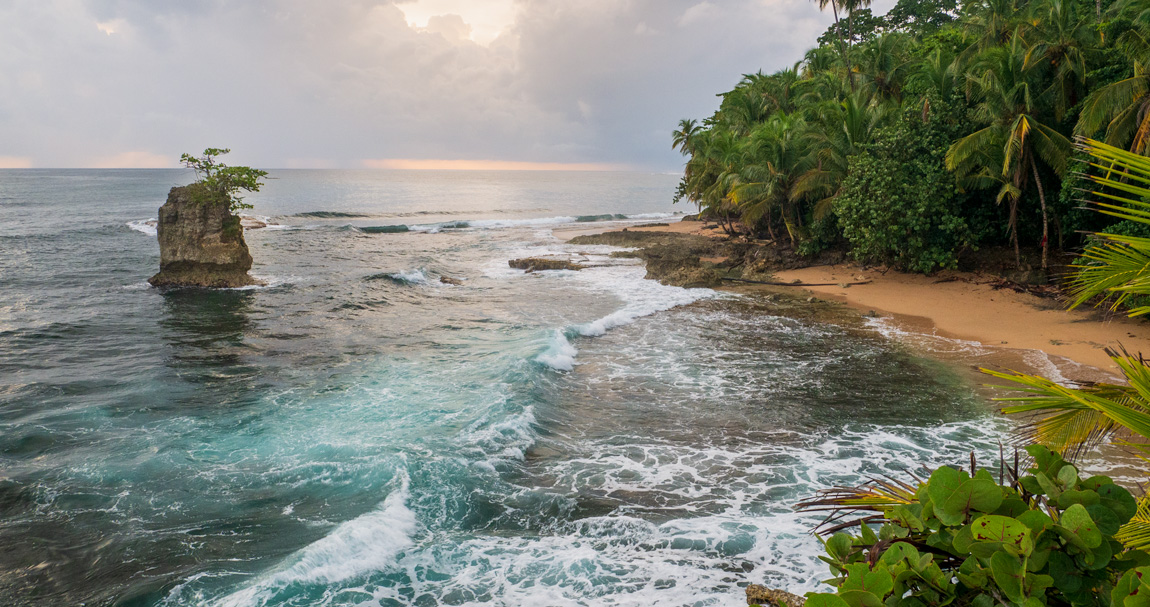
Cahuita is one of the best places on Costa Rica’s South Caribbean coast for travelers who want a mix of wildlife, ocean, and easy hiking. The park protects coastal forest, white-sand beaches, and coral reef, all in one compact area. That combination matters because you are not choosing between a rainforest day and a beach day. You get both.
On paper, it sounds simple. In real life, the park reveals itself in layers. The howler monkeys announce themselves before you see them. Sloths look like part of the tree. Poison dart frogs are often only obvious once a guide points to a leaf the size of your hand. Even the plants tell a bigger story when someone local explains which are native, which are medicinal, and how the coastline has shaped life here.
That is where a guided tour earns its value. You are borrowing trained eyes and local knowledge. Instead of guessing where wildlife might be, you are moving with someone who knows the patterns, the calls, and the quiet signs most visitors miss.
What to expect on a Cahuita National Park tour
Most visitors picture one thing when they hear “tour,” but Cahuita can be experienced in a few different ways. It depends on whether your priority is wildlife, snorkeling, family-friendly pacing, or making the day as easy as possible.
A classic wildlife hike usually follows the coastal trail, with frequent stops to scan the canopy, the undergrowth, and the beach edge. This kind of outing is ideal if you want a relaxed pace and the best chance of actually seeing animals rather than just hiking through their habitat. It is also a strong fit for families, couples, and travelers who do not want a strenuous activity.
Some tours pair the hike with snorkeling when ocean conditions cooperate. That can be a great combination because Cahuita is one of the few places in the region where you can experience both terrestrial wildlife and reef life in the same outing. Still, snorkeling here is not a guarantee every day of the year. Visibility and sea conditions matter. A good operator will be honest about that instead of forcing the plan when conditions are not right.
That honesty matters more than people think. The best day in Cahuita is not the one that sticks rigidly to a script. It is the one adapted to tides, weather, and wildlife activity.
Wildlife you might see
No ethical guide should promise a checklist, because this is a national park, not a zoo. Still, Cahuita has a strong track record for sightings.
Depending on the day, you may see sloths, white-faced monkeys, howler monkeys, raccoons, iguanas, basilisks, toucans, herons, hummingbirds, snakes, butterflies, and frogs. The smaller the creature, the more a guide helps. Almost anyone can notice a troop of monkeys crashing through branches. Spotting a sleeping sloth tucked high in a cecropia tree is another story.
Guides also add context that turns a sighting into a real memory. Seeing a snake is exciting. Learning how it behaves, why it uses that area, and how locals safely share space with wildlife makes the experience richer and often less intimidating.
The snorkeling side of Cahuita
When the sea is calm and visibility is decent, snorkeling can be a highlight. The reef system off Cahuita is ecologically important and offers a different view of the park’s biodiversity.
This part of the experience is a little more conditional than the hike. Rain, current, and sediment can all affect visibility. If you are visiting in a wetter period or your schedule only allows one exact date, it helps to stay flexible in your expectations. The forest trail almost always delivers something. Snorkeling is more weather-dependent.
For many travelers, that is another reason to choose a local operator with direct communication. You want clear guidance before your tour, not a vague promise and a shrug when conditions change.
Is it better to visit Cahuita with a guide or on your own?
If your goal is simply to walk a scenic trail, swim, and spend a few quiet hours outdoors, self-guided can work. Cahuita is one of the more accessible parks in Costa Rica, and that is part of its appeal.
If your goal is to understand what you are seeing, maximize wildlife sightings, and avoid missing the details that make the park special, a guide is the better choice.
This is especially true for first-time Costa Rica visitors. Many travelers underestimate how cryptic tropical wildlife can be. They imagine animals standing out against the landscape. In fact, nature here is full of camouflage, stillness, and subtle movement. A knowledgeable guide does not just spot animals. They teach you how to see the forest differently.
There is also a practical side. Guided tours remove a lot of small frictions that can chip away at a vacation day – timing, transportation planning, gear coordination, trail interpretation, and figuring out whether snorkeling conditions are actually safe and worthwhile.
Who gets the most out of this tour
Cahuita works for almost anyone, but it is especially rewarding for travelers who want a high-nature experience without a punishing hike. The trail is relatively gentle, which makes it a strong option for families with kids, active older travelers, and couples who want adventure without turning the day into a fitness test.
It is also ideal for people staying in Puerto Viejo, Punta Uva, or nearby areas who want one outing that feels distinctly Caribbean Coast. The park has a rhythm of its own – beach light, jungle sounds, Afro-Caribbean history nearby, and that mix of laid-back beauty with serious biodiversity.
Solo travelers often enjoy it too, especially in a small-group format. Wildlife spotting becomes easier, logistics feel simpler, and the experience tends to be more personal than a large bus-style excursion.
How to choose the right Cahuita National Park tour
Not all tours are built the same, even when they use similar names.
The first thing to look for is guide quality. In Cahuita, the guide is the experience. A sharp, patient guide with deep local knowledge can turn a simple trail walk into one of the standout days of your trip.
Small groups matter too. In a crowded group, people bunch up, talk over wildlife moments, and spend more time waiting than observing. In a smaller group, it is easier to hear the guide, ask questions, and take your time when something special appears in the trees.
It is also worth paying attention to how a company talks about the region. The strongest operators do more than sell a park visit. They understand the South Caribbean as a living place – nature, local history, coastal communities, and the impact tourism has on them. That usually translates into better guiding and a more respectful experience.
Booking direct can help here. With Caribe Sur Costa Rica, travelers get straightforward communication, honest pricing without third-party markups, and the kind of local trip-planning support that is useful when you are deciding how Cahuita fits with Puerto Viejo, Punta Uva, or other adventures nearby.
Best time to go
Cahuita is beautiful year-round, but conditions shape the experience.
For wildlife hikes, mornings are usually best. Temperatures are more comfortable, wildlife activity can be better, and the trail feels calmer before the hottest part of the day. If snorkeling is part of your plan, the best timing depends even more on weather and sea conditions than on the calendar alone.
The South Caribbean does not always follow the same weather patterns as the Pacific side of Costa Rica, which catches some travelers off guard. That is another reason local guidance helps. General countrywide advice is often too broad for this coast.
What to bring without overpacking
You do not need much for Cahuita, but the right basics make the day smoother: comfortable walking shoes or sturdy sandals, water, reef-safe sun protection, bug spray, a swimsuit if snorkeling or swimming is on the plan, and a dry bag if you like keeping electronics protected.
A camera or phone is enough for most people, especially if your guide uses a spotting scope and helps line up photos. Binoculars are nice but not essential on a guided outing.
The best approach is simple: pack for heat, occasional rain, and time near both forest and sea.
A Cahuita National Park tour is worth it when you want more than a walk. It gives shape to what you are seeing, raises your chances of memorable wildlife encounters, and turns a beautiful place into a story you will still be telling long after you leave the Caribbean coast.


