
South Caribbean Costa Rica Travel Guide
You can feel the South Caribbean before you even unpack. The air is warmer, the road slows down, reggae drifts out of open restaurants, and suddenly your Costa Rica trip stops looking like a checklist and starts feeling like a place you actually want to stay. This South Caribbean Costa Rica travel guide is for travelers who want that balance – wild nature, easy beach time, great food, and local experiences that feel personal rather than packaged.
The biggest mistake people make here is trying to rush it. Puerto Viejo, Cahuita, Punta Uva, and Manzanillo are close together, but they are not the kind of places you want to race through. The South Caribbean works best when you give yourself time to kayak a quiet river in the morning, spot sloths in the trees by lunch, and still make it to the beach for a late swim.
Why the South Caribbean of Costa Rica stands out
Costa Rica has no shortage of beautiful coastlines, but the South Caribbean has a character all its own. The culture is shaped by Afro-Caribbean heritage, Indigenous communities, tropical rainforest, and a coastline where jungle and sea sit side by side. That mix changes the whole feel of a trip. You are not just coming for beaches. You are coming for wildlife, food, music, local stories, and a more laid-back rhythm.
It is also one of the easiest regions in Costa Rica for travelers who want a lot of variety without constant hotel changes. You can base yourself in Puerto Viejo and reach Cahuita National Park, Punta Uva, Playa Chiquita, Manzanillo, waterfalls, cacao experiences, and wildlife-rich waterways without turning your vacation into a string of long transfers.
For many visitors, that is the sweet spot. You get the tropical postcard scenery, but you also get guided experiences that add real depth – snorkeling over coral, learning how to spot poison dart frogs, visiting Bribri communities, or paddling a calm river while your guide points out monkeys, iguanas, and birds you would never notice on your own.
Where to stay in the South Caribbean
Puerto Viejo is usually the best base if you want energy, food options, and easy access to tours. It has the widest range of hotels, restaurants, and nightlife, but it still feels relaxed compared with bigger beach towns elsewhere. If you like being able to walk to dinner and then spend the next day on a wildlife tour or beach-hopping by bike, start here.
Cahuita is quieter and a good fit for travelers who want a slower pace. It feels more residential and low-key, with the national park right nearby. It is especially appealing for couples and families who prefer peaceful evenings over a busier town scene.
Punta Uva and Manzanillo are ideal if your priority is nature and beach time. These areas feel more tucked into the jungle, with some of the prettiest coastline in the region. The trade-off is convenience. You will have fewer dining options nearby and will rely more on a car, bike, taxi, or arranged transportation.
If you are staying 4 to 6 nights, Puerto Viejo makes the most sense for most first-time visitors. If you are staying longer, combining a few nights in Puerto Viejo with a few nights farther south can give you both convenience and a deeper sense of the coast.
Best things to do in this South Caribbean Costa Rica travel guide
A lot of travelers come here expecting beach days and end up talking most about the wildlife. That is not hype. This region gives you strong chances to see sloths, monkeys, toucans, basilisk lizards, frogs, and marine life, especially when you go with a guide who knows where to look.
Cahuita National Park is one of the most rewarding outings in the area. You can hike through coastal forest with the ocean beside you, and the combination of easy trails and abundant wildlife makes it a favorite for families, couples, and first-time visitors. Add snorkeling when conditions are good, and it becomes one of the most complete half-day experiences on the coast.
River kayaking is another standout, especially for travelers who want wildlife without a strenuous effort. Calm waterways near the coast can be excellent for spotting sloths, monkeys, birds, and reptiles. The difference a strong local guide makes here is huge. A lot of animals disappear into the scenery unless somebody trained is scanning every branch and movement.
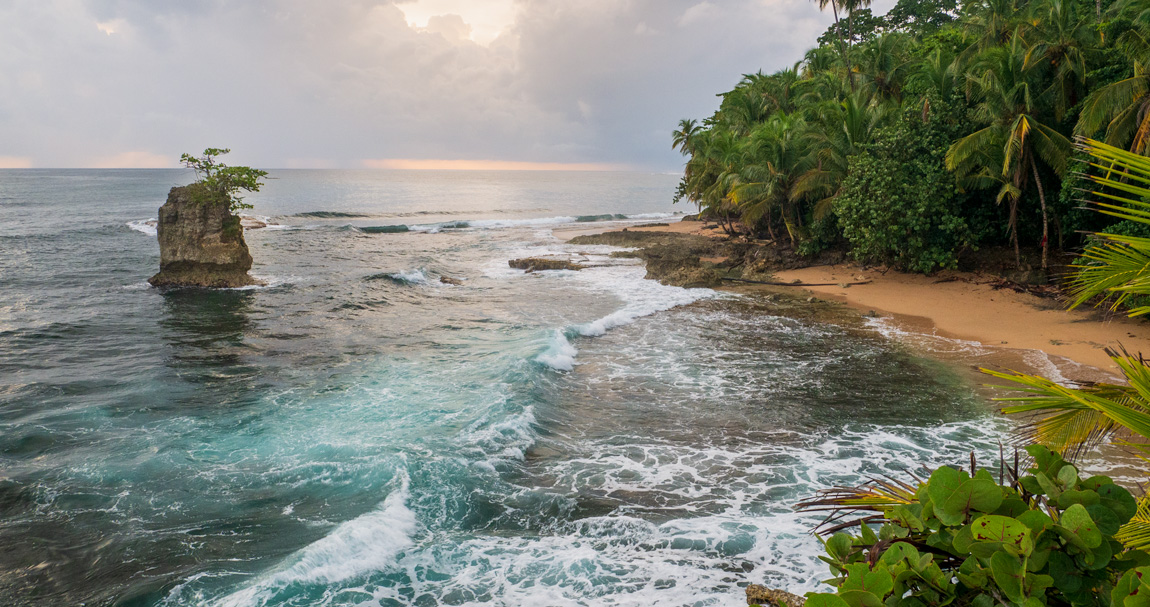
If beach scenery is high on your list, Punta Uva deserves time. The water can be clear and calm, and the area has that classic South Caribbean look of leaning palms, green headlands, and bright blue water. Clear kayak outings work especially well here when sea conditions cooperate.
Farther south, Gandoca-Manzanillo is for travelers who want a wilder feel. The beaches are beautiful, but the draw is really the sense of remoteness and biodiversity. This is the kind of place where a guided walk or boat trip adds context you simply do not get on your own.
Then there are the cultural experiences. Visiting a Bribri community or joining a cacao-focused experience can shift the entire tone of a trip. Instead of just moving from beach to beach, you start to understand who lives here, how traditions are preserved, and why community-based tourism matters on this coast.
When to go and what the weather is really like
The South Caribbean does not follow the same weather patterns as Costa Rica’s Pacific side, which catches a lot of visitors off guard. September and October are often surprisingly sunny and can be excellent months for this region, while other parts of the country are deep in rainy season.
That said, weather here is never a guarantee. You can get a beautiful morning and an afternoon shower any time of year. December through April is still popular, especially for US travelers escaping winter, but the coast can be good well beyond those months.
If your main goals are snorkeling and clear-water beach time, conditions matter more than the calendar alone. Some days are perfect. Some days the sea is rough or visibility is low. That is one reason direct communication with a local operator helps so much – you get honest advice based on what is actually happening that week, not generic expectations.
Getting around without overcomplicating the trip
You do not need to make this region harder than it is. If you are staying mostly between Cahuita and Manzanillo, many travelers do well without a rental car, especially if they stay in Puerto Viejo. Bikes, taxis, and pre-arranged tour transportation can cover a lot.
A rental car gives you flexibility, especially if you are staying outside town or traveling with kids, but it is not essential for everyone. The roads in the main South Caribbean corridor are straightforward by Costa Rica standards. The real question is how independent you want to be versus how much you want a stress-free vacation.
For tours, direct booking is often the better route. You get clearer communication, honest pricing without third-party markups, and a chance to ask practical questions before you arrive. For many travelers, that matters just as much as the activity itself.
What kind of traveler this region suits best
The South Caribbean is perfect for travelers who like nature with personality. If you want giant resorts, polished nightlife districts, or highly structured sightseeing, other parts of Costa Rica may fit better. Here, the appeal is more textured. You trade some polish for more character, better local interaction, and the feeling that the region still belongs to the people who live here.
It is especially good for couples, solo travelers, and families who want soft adventure. You can have a full day that includes wildlife, a beach, and great food without needing to be ultra-fit or obsessively organized. That is a big part of why people fall for this coast.
And if ethical travel matters to you, this region gives you meaningful ways to travel better. Small-group guiding, locally run experiences, and community-based visits can keep more of your travel spending in the area. At Caribe Sur Costa Rica, that local connection is part of the point – helping travelers see more while supporting the communities and ecosystems that make this coast special.
A few smart tips before you go
Pack for heat, humidity, and rain, even if the forecast looks friendly. Quick-dry clothing, reef-safe sun protection, bug spray, sandals, and a light rain layer will get used. Water shoes help on some beaches and boat or snorkeling outings.
Do not plan every hour. This coast rewards travelers who leave room for a roadside fruit stop, a last-minute wildlife sighting, or a guide’s suggestion to adjust timing based on conditions. The best days here often feel a little improvised, even when they are carefully arranged behind the scenes.
If you want the South Caribbean at its best, let it be what it is – warm, lush, unpredictable, and full of life just beyond the obvious view.


