

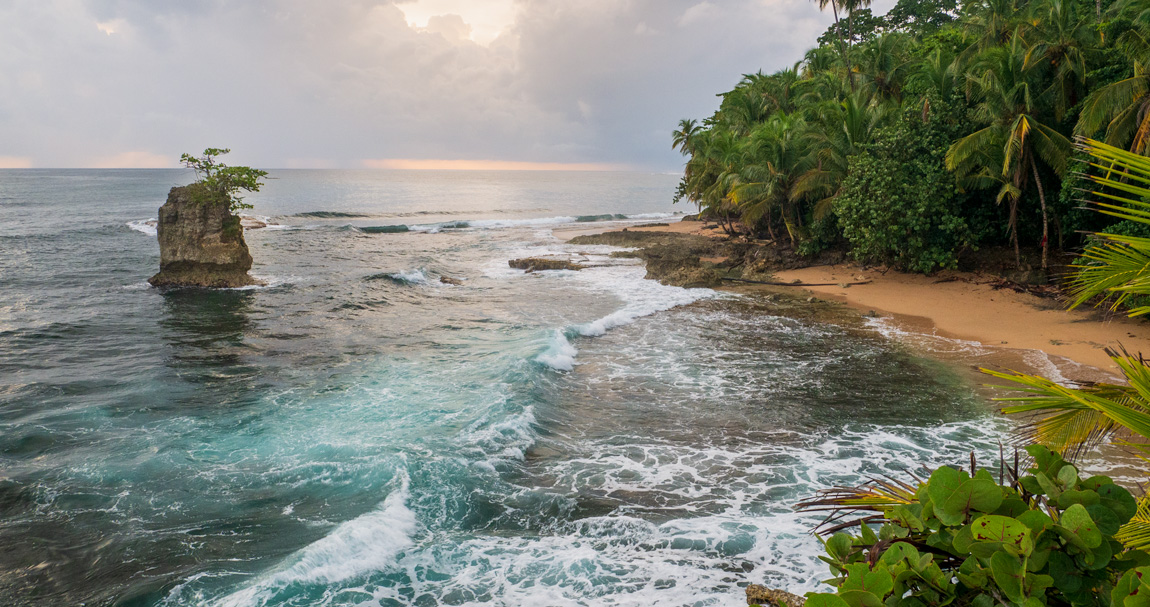

Gandoca Manzanillo Hike: What You’ll Really See
You know that moment in Costa Rica when the jungle gets quiet and you can suddenly hear the ocean again – and then a troop of howler monkeys makes sure nobody forgets where they are? That’s the Gandoca-Manzanillo area in a nutshell. It’s wild, coastal, and surprisingly nuanced. The hiking is not “hard” in a mountain sense, but it can be humbling in a tropical sense: heat, mud, surprise rain, and wildlife that rewards patience more than speed.
A Gandoca Manzanillo hiking tour is less about crushing miles and more about learning how this corner of the South Caribbean actually works – why the forest looks different from Cahuita, why the beaches can be empty even in high season, and why the best sightings often happen when you slow down and let your guide scan the canopy.
Why hike Gandoca-Manzanillo instead of somewhere else?
Gandoca-Manzanillo Wildlife Refuge sits at the southern end of Costa Rica’s Caribbean coast, not far from Puerto Viejo and Manzanillo. It’s a place where rainforest meets sea grapes, mangroves, and coral reef zones offshore. That mix creates a different wildlife lineup than you’ll see on more standardized, heavily visited trails.
You’re also hiking in a refuge, not a manicured park. That’s the trade-off and the magic. Trails can shift with weather, fallen trees happen, and sometimes the “path” is simply the most logical line through coastal forest. The payoff is that it still feels like a living landscape, not an attraction designed to move people through a circuit.
Another reason it stands out: the experience is layered. Even if you come for sloths and monkeys, you end up learning about medicinal plants, coastal ecology, nesting behavior, and how communities here balance tourism with conservation and daily life.
What a Gandoca Manzanillo hiking tour feels like
Most travelers expect a straightforward “walk to a viewpoint.” This is different. The pace is usually relaxed and stop-and-go – not because you’re tired, but because spotting wildlife takes time.
You might spend ten minutes on a single tree because your guide sees a shape that doesn’t belong – a sleeping sloth tucked into a fork, or a camouflaged iguana that looks like part of the bark. You’ll hear things before you see them: toucans cracking fruit, howlers in the distance, the rustle that could be a basilisk or just a well-fed agouti.
On the coast, the forest opens and the mood changes. Salt air comes in, the light gets brighter, and suddenly you’re scanning for frigatebirds, pelicans, and tracks in the sand. Depending on the specific route and conditions, you may also pass mangrove edges where the ecosystem feels almost like a different country – quieter, darker, more subtle.
Wildlife odds: what you can realistically see
Let’s be honest: nobody can promise a specific animal on a hike. But Gandoca-Manzanillo can be generous if you show up at the right time and you’re not rushing.
Sloths are a common hope, and your odds are strong because guides know the “favorite trees” and the small signs that give them away. Monkeys are also frequently heard and often seen, especially howlers. White-faced capuchins can appear too, but they’re more unpredictable.
Birdlife is one of the biggest wins here, even for people who “aren’t birders.” You’re in prime territory for toucans and toucanets, plus a rotating cast of tanagers and flycatchers. If you’re lucky and conditions line up, you might spot raptors soaring above the canopy.
Reptiles and amphibians depend heavily on weather. After rain, the forest can feel like it turns on: frogs calling, lizards active, and more movement overall. In drier windows, you may see fewer amphibians but still have excellent canopy sightings.
The key variable is not just the refuge – it’s your style of hiking. Fast walkers often “miss” wildlife that was right there.
Trail conditions and difficulty: the honest version
This is not a long, punishing trek, but it’s also not a paved stroll. Most routes are manageable for active families and first-time Costa Rica visitors, as long as you’re comfortable walking on uneven ground.
Expect roots, occasional mud, and patches that get slick. After heavy rain, some sections can feel like a balancing act. If you have knee issues, you’ll want shoes with grip and a guide who paces it thoughtfully.
Heat matters more than elevation here. Even a short hike can feel intense at midday if the air is still. That’s why morning starts tend to be the sweet spot.
It also depends on which exact section you hike. Some routes emphasize coastal viewpoints and beach transitions. Others lean more into forest and wildlife tracking. A good tour operator adjusts based on your group, the weather, and recent conditions.
Best time of day (and why it matters)
If you want the highest wildlife activity and the most comfortable temperatures, go earlier. Morning light also makes it easier to spot movement in the canopy and see true colors in birds.
Afternoons can still be beautiful, especially if you’re pairing the hike with a beach stop, but you’re more likely to deal with hotter conditions and higher chances of rain depending on the season.
If you’re visiting during a rainier stretch, that doesn’t automatically mean “bad day.” It can mean fewer people, greener forest, and better frog and insect activity. The trade-off is comfort. You’ll want a rain jacket you’ll actually wear, not something that turns into a sauna.
What to bring so the hike stays fun
You don’t need fancy gear, but the right basics make a huge difference in how you feel two hours in.
Closed-toe shoes with traction are the big one. Sandals are fine for the beach afterward, but on the trail they can be a recipe for slips and stubbed toes.
Bring water even if the hike is shorter than you’re used to at home – humidity changes the game. Bug spray is helpful, but it’s not about bathing in it. A light, breathable long-sleeve can sometimes do more than extra chemicals.
A small dry bag or zip pouch is smart for phones and car keys. And if you care about photos, binoculars or a camera with a bit of zoom will make you much happier than trying to digital-zoom a sloth from the ground.
Guided vs self-guided: why a guide changes everything here
Could you hike without a guide? Sometimes, yes. But the value of a guided Gandoca-Manzanillo hike isn’t just “someone to lead the way.” It’s interpretation and wildlife detection.
Most iconic sightings are not obvious. Sloths look like mossy lumps. Snakes look like vines until they don’t. Even toucans can hide in plain sight when they’re still.
A local guide also reads micro-conditions: which trees are fruiting, where monkeys were heard yesterday, which section is muddy after last night’s rain, and where to slow down because something is moving above you.
There’s also a safety and logistics angle. Trails can change, and weather can turn. Having someone who knows when to reroute or when to wait out a squall keeps the day stress-free.
If you’re looking for a small-group, locally guided experience in the South Caribbean, this is exactly the kind of day we plan at Caribe Sur Costa Rica – honest pacing, wildlife-focused guiding, and routes that fit your trip rather than forcing you into a one-size schedule.
How to choose the right Gandoca Manzanillo hiking tour
Not all tours here feel the same, even if they share the same name. When you’re comparing options, listen for specifics rather than hype.
A strong tour description mentions where you’ll meet, how long the experience typically takes, and what the focus is (wildlife, coastal scenery, mangroves, or a blend). It should also be clear about group size. In places like Gandoca-Manzanillo, smaller groups tend to see more because you can stop quietly and move as a unit.
Ask about the pace. If you want a photographer’s pace with lots of stops, say that. If you’re traveling with kids and need breaks, say that too. The best days happen when expectations match reality.
Finally, ask how the tour handles rain. You don’t need a guarantee of sunshine – you need a plan.
Pairing your hike with the rest of your Caribe Sur trip
Gandoca-Manzanillo fits beautifully into a Puerto Viejo-based itinerary because it gives you that “further south” feeling without requiring a major travel day.
If you’re trying to balance activities, this hike pairs well with a calmer water experience on another day, like snorkeling in Cahuita when conditions are clear. It also works as a counterpoint to more adrenaline-forward plans, like waterfalls or longer adventure days.
And if your trip includes cultural immersion, hiking first can actually deepen it. Once you’ve walked through the landscape and learned what grows here and why, conversations about local life, food, and tradition land differently. You’re not just seeing Costa Rica – you’re starting to understand a specific place.
A closing thought to plan by
Treat Gandoca-Manzanillo like you would a great wildlife documentary: the best scenes happen when you give them time. Start a little earlier than you think you need to, bring patience like it’s part of your packing list, and let the refuge set the rhythm – it almost always rewards you for it.


